

“Whoever steals my purse steals trash;…but he that fliches from me my GOOD NAME robs me of that which not enriches him, and makes me poor.” –Williams Shakespeare
As we draw closer to 2027 general elections, the atmosphere is tense with unabashed desire for power perfectly pitched to the country’s mood. In Akwa Ibom State, for the first time in two years, the 8th Assembly of Akwa Ibom State House of Assembly led by Speaker Udeme Otong has grabbed headlines in Nigeria, but by sheer fluke.
Hon. Udeme Otong, the current symbol of the legislature in Akwa Ibom State, recently while addressing his supporters who paid him a courtesy visit during his birthday celebration was caught in a video– now viral online–boasting of having in the custody of his pocket the 26 tickets of lawmakers who would constitute the 9th Akwa Ibom State Legislative Assembly in 2027.
The speaker with the luxury of happiness that his new age offered him had dared to uncloth and leave stake naked, the reality of that decayed institution of government in our State.
According to him, “All the 26 House of Assembly tickets are already in my pocket, intact. I will be the one to share them to other local government constituencies. I made the negotiations. No one else did. I will personally choose who becomes a House of Assembly member and hand the ticket to the person from my pocket. If I see somebody who will come to give the governor trouble, I will tell him that ticket should not be given to such a person.”
This is the sad picture of the “dirty Limericks” of politics that public officials in our society compose for the people!
Since the video surfaced, it has generated a heated debate, with citizens of the State in both online and offline discursive arenas presenting competitive perspectives on the issue. However, men of honour and tact irrespective of partisan affiliations have agreed that such boasting lacks moral rudder to emanate from the leader of a law making institution in a democratic state.
It is a clear indication that Akwa Ibom people are represented by weak-kneed lawmakers who occupy public offices to feed their narrow passions.
In saner climes where institutions work, the Speaker of a Legislative Assembly stands as the symbol of the entire Legislature in a State—an institution that must function as an incubator of civil rights, watching and defending the citizenry against violation of their rights and checking the abuse of power by the executive arm of government.
The Speaker’s utterance represents the voice of a failed institution where impunity is prevalent.The voice of a muzzled conscience that betrays the people’s mandate.
The legislature is an institution from which the moral tissue of operations of every other institution of the State receives it’s tone and timbre. A State with a corrupt legislature teeters on the precipice of doom.
Election into to the House of Assembly should be conducted in a manner that earns public trust because members of that institution hold the faith of law.
According to Richard Wright, “Law embodies the will of the people.” A lawmaker doubles “as an agent of the law and servant of the law, as a representative of the organized will of the people.”
Every public office in a democratic State should be occupied by earning public trust.
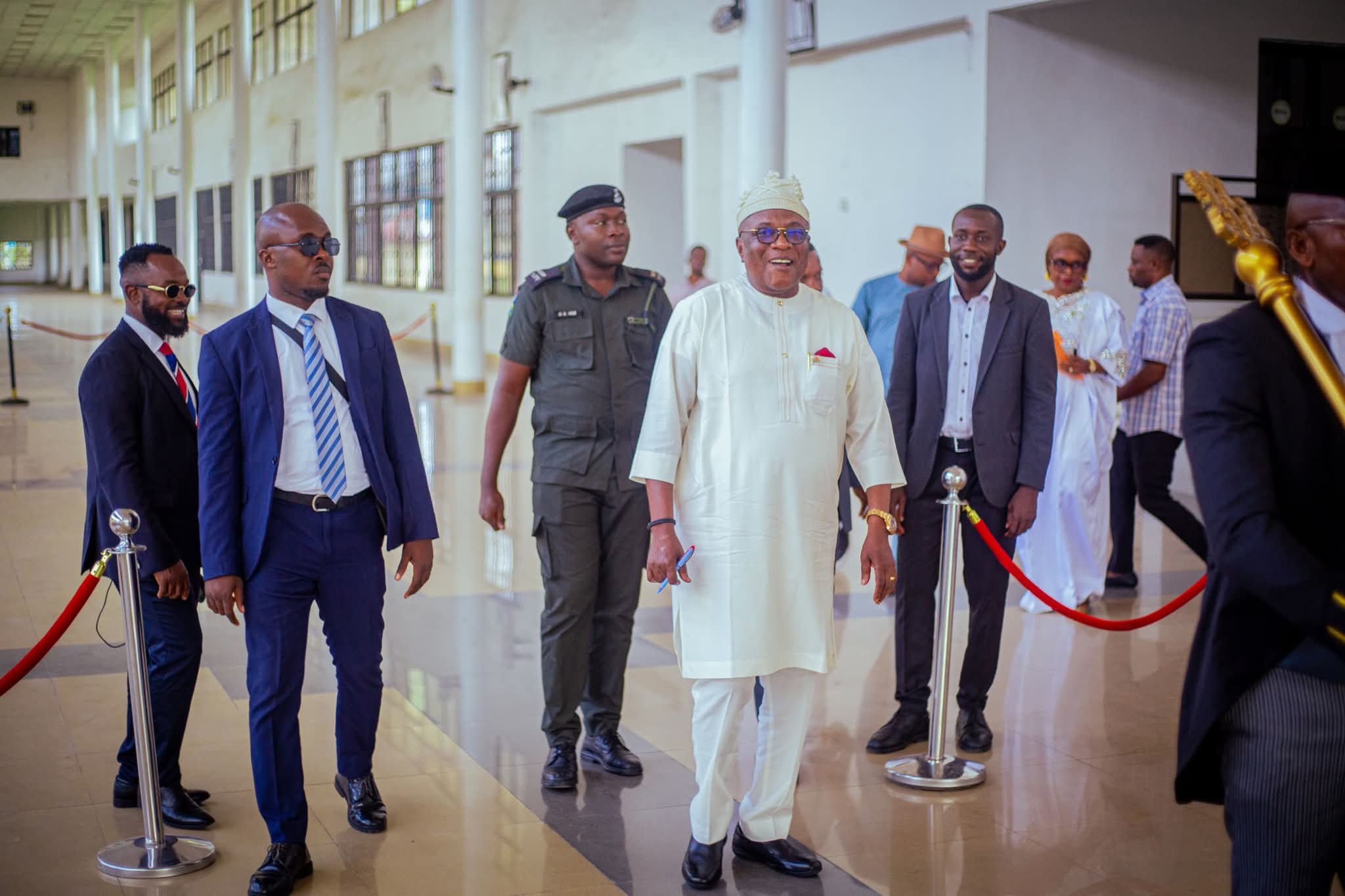
The MACE in the legislative chamber represents the people’s will, trust and approval of the Assembly which the Speaker of the House presides over it’s affairs.
The mace captures the interest of citizens in a democracy. It is potent and visible symbol of the legislature’s legitimate authority, the rule of law, and the physical manifestation of the people’s will.
The mace as the symbol of the legislature’s power, indirectly represents the collective voice of the citizenry.
Speaker Udeme Otong’s comment is an affront on the peoples will. A testimony that the people’s MACE is traveling with a stained name.The good name of our legislative institution has been stained by men of weak virtues.
How long shall we watch while this impunity lasts?
Shadrach Okon, a journalist writes from Uruk Obong Village, a verdant community in Abak without basic amenities.
