

By Prince Ikim
Nigeria stands at a pivotal moment in its national journey. For decades, the country grappled with deep-rooted economic and structural challenges that constrained growth, weakened public confidence, and limited opportunities for millions of citizens. At such moments, leadership is measured not by the ability to avoid difficult decisions, but by the courage to confront them.
When President Bola Ahmed Tinubu assumed office in May 2023, he inherited an economy facing multiple exchange rates, unsustainable fuel subsidies, mounting debt obligations, infrastructure deficits, insecurity, inflationary pressures, and declining investor confidence. These challenges had real consequences for ordinary Nigerians, reflected in rising living costs, unemployment, and uncertainty about the future.
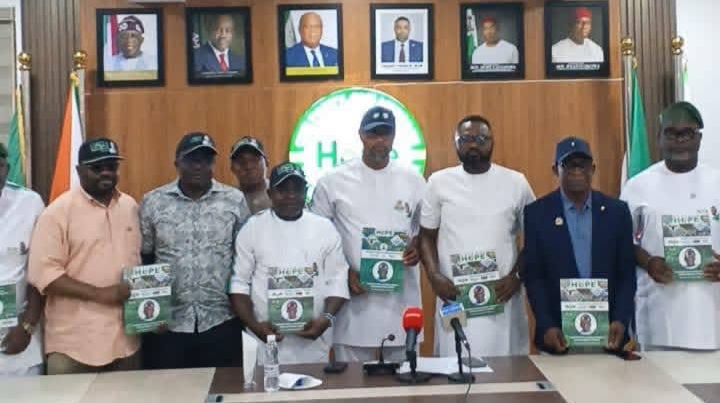
Rather than postpone hard choices, the administration launched the Renewed Hope Agenda, a reform programme designed to address the structural weaknesses that have hindered Nigeria’s development for years. While the reforms have required sacrifice, they have also begun laying the foundation for long-term economic stability and national renewal.
One of the administration’s most significant priorities has been restoring macroeconomic stability. By implementing fiscal and monetary reforms, government has sought to strengthen public finances, improve revenue generation, and rebuild investor confidence. Increased government revenues and improved fiscal management have created greater capacity for investments in critical sectors such as infrastructure, healthcare, education, and social welfare.
Economic indicators are gradually showing signs of improvement. Growth has remained positive, foreign reserves have strengthened, and efforts to stabilise prices and improve food supply chains are beginning to ease inflationary pressures. While challenges remain, these developments suggest that the economy is moving toward a more sustainable footing.
Beyond the macroeconomic numbers, the impact of government policies is becoming visible across several sectors.
Infrastructure development remains a cornerstone of the Renewed Hope Agenda. Major road projects, including the Lagos-Calabar Coastal Highway, the Lagos-Ibadan Expressway, and the East-West Road, are intended to improve connectivity, facilitate trade, and stimulate economic activity. Investments in ports, airports, and logistics systems are also expected to enhance Nigeria’s competitiveness and support long-term growth.
Agriculture has received renewed attention as government seeks to strengthen food security and create jobs. Support for farmers through fertilisers, improved seedlings, mechanisation initiatives, and expanded agricultural financing aims to increase productivity while reducing the country’s dependence on food imports. As these interventions mature, they hold the potential to lower food costs and improve rural livelihoods.
The energy sector is also undergoing significant transformation. Efforts to increase crude oil production, expand domestic refining capacity, promote gas utilisation, and invest in renewable energy are intended to improve energy security and support industrial development. Programmes encouraging the adoption of compressed natural gas (CNG) are helping to provide more affordable energy alternatives for transportation and businesses.
In healthcare, government has prioritised strengthening primary healthcare services, expanding health insurance coverage, and improving maternal and child health outcomes. Upgraded healthcare facilities, enhanced workforce training, and support for local pharmaceutical production are contributing to a more resilient healthcare system capable of serving a growing population.
Education and youth empowerment have also emerged as key priorities. Through initiatives such as the Nigerian Education Loan Fund (NELFUND), more students now have access to financial support for higher education. Investments in digital skills, vocational training, and technology programmes are equipping young Nigerians with the knowledge and tools needed to succeed in a rapidly evolving global economy.
Support for entrepreneurship and small businesses is another important pillar of the administration’s strategy. Policies aimed at strengthening local production, supporting micro, small, and medium-sized enterprises, and promoting industrial development are helping create jobs and stimulate economic diversification.
Security remains central to national development. Continued efforts by security agencies to combat terrorism, banditry, kidnapping, and crude oil theft have contributed to improved stability in several parts of the country. Enhanced security not only protects lives and property but also creates the environment necessary for investment and economic growth.
Complementing these efforts is the Renewed Hope Initiative, led by First Lady Senator Oluremi Tinubu. Through programmes focused on women, youth, vulnerable populations, education, healthcare, and economic empowerment, the initiative has expanded social support and brought direct assistance to communities across the federation.
It is important to acknowledge that the reform process has not been without difficulties. Many Nigerians continue to face economic pressures, particularly from the high cost of living. These concerns are genuine and deserve sustained attention from policymakers. However, meaningful reform often requires navigating short-term challenges in pursuit of long-term gains.
The critical question before the nation is whether Nigeria should continue on the path of reform or return to policies that many experts believe contributed to economic distortions and fiscal pressures. The answer lies in maintaining focus, strengthening implementation, and ensuring that the benefits of reform reach every segment of society.
The signs of progress may still be emerging, but they are increasingly visible. Stronger economic fundamentals, expanding infrastructure, growing support for education and healthcare, and renewed efforts to empower businesses and communities all point toward a nation working to reposition itself for future prosperity.
Nigeria’s transformation will not happen overnight. It requires patience, consistency, and collective commitment from z, the private sector, civil society, and citizens alike. Yet the foundation being laid today has the potential to create a more stable, productive, and inclusive future.
As we look ahead, there is reason for cautious optimism. With sustained reforms, responsible leadership, and the resilience for which Nigerians are known, the country can unlock its enormous potential and build a future that delivers opportunity and prosperity for all.
Prince Ikim,
Renewed Hope Ambassadors Coordinator, writes from Akwa Ibom State, Nigeria.
