

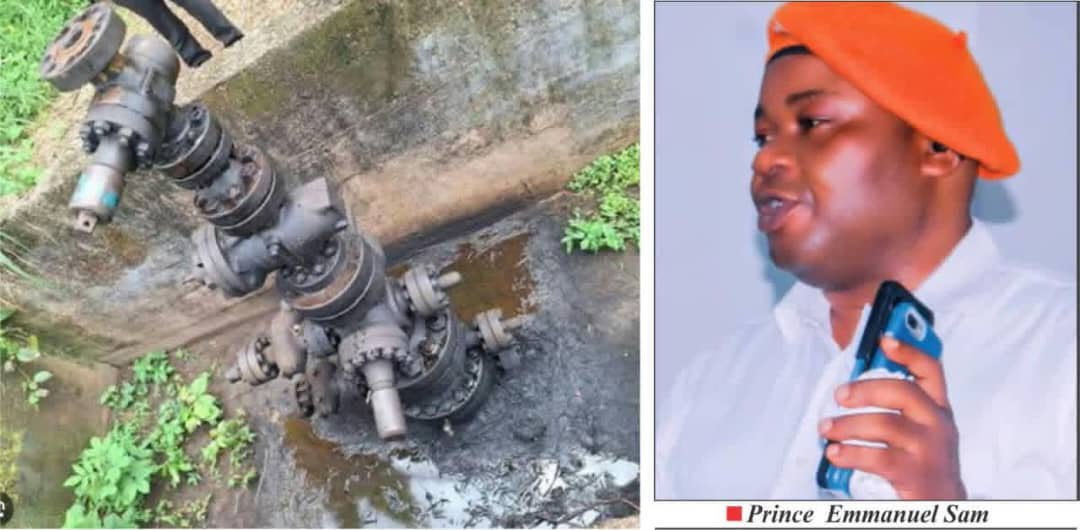
By Emmanuel Sam
There is an uncomfortable contradiction in Nigeria’s oil economy that demands urgent national attention: Akwa Ibom contributes substantially to the nation’s petroleum wealth, yet its oil-producing communities continue to struggle with unemployment, environmental degradation, poor infrastructure and limited economic opportunities.
Akwa Ibom, located in Nigeria’s South-South geopolitical zone, remains a major contributor to the country’s petroleum industry. Beyond its extensive crude oil and natural gas resources, the state is also endowed with mineral deposits, including zinc, lignite, limestone and salt. Its strategic position in Nigeria’s oil economy makes the question of fair economic inclusion particularly important, especially for the communities whose land and environment bear the impact of petroleum exploration and production.
While pipeline surveillance arrangements in other parts of the Niger Delta have created significant economic opportunities for contractors and host communities, Akwa Ibom is still waiting for meaningful inclusion in an industry built around the protection of resources extracted from its territory.
This is no longer a question the Federal Government can afford to ignore. It is a question of economic justice, equitable participation and political accountability.
The controversy surrounding pipeline surveillance contracts has brought this disparity into sharper focus. Niger Delta activist Asari Dokubo reportedly claimed that Government Ekpemupolo, popularly known as Tompolo, receives ₦2.1 trillion annually for pipeline surveillance, while the Olu of Warri receives ₦2.7 trillion for a similar arrangement.
These figures are extraordinary and remain unverified. The Olu of Warri, through his representative to NNPC Limited and its joint venture partners, has rejected the ₦2.7 trillion allegation and challenged Dokubo to produce documentary evidence. The claims nevertheless raise broader questions about the scale of pipeline surveillance arrangements, the beneficiaries and the transparency of public expenditure in the sector.
Beyond these allegations, the financial records of the Nigerian National Petroleum Company Limited (NNPC) have brought another important dimension to the debate.
According to its audited financial statements, NNPC recognised approximately ₦7.13 trillion in energy security expenses in 2024. Its 2025 accounts, however, showed that no new energy security expense was recognised during that year following a reconciliation exercise with relevant government agencies.
The company’s total receivables from the Federation stood at approximately ₦11.2 trillion at the end of 2025. Within this figure, other receivables from the Federation increased from ₦8.84 trillion in 2024 to ₦11.2 trillion in 2025, a rise of approximately ₦2.36 trillion. NNPC explained that these other receivables relate to advances to the Federation and costs incurred in protecting the country’s oil and gas assets.
Nevertheless, the financial disclosures demonstrate the enormous sums associated with oil and gas security and related obligations.
The question for Akwa Ibom is unavoidable: out of these trillions of naira committed to oil and gas security, how much has been spent on protecting petroleum infrastructure in Akwa Ibom? How much has reached host communities? And how many qualified indigenous companies have benefited?
Meanwhile, Government Ekpemupolo, popularly known as Tompolo, and his associated political mobilisation network have demonstrated considerable capacity to distribute vehicles across several states in support of the PBAT Door-to-Door Movement ahead of the 2027 general elections.
Reports indicate that at least 271 campaign vehicles have been distributed across nine states, including Kano (50), Bauchi (32), Oyo (32), Jigawa (31), Ondo (26), Cross River (25), Enugu (25), Taraba (25) and Zamfara (25).
The distributions span several months, with additional political mobilisation activities continuing across the country.
The scale of these distributions is remarkable and raises questions about the economic influence surrounding the pipeline surveillance sector and the capacity of the network associated with Tompolo.
Although the vehicle distributions do not independently establish the source of funding, they provide a striking illustration of the logistical resources being deployed across different states.
The question Akwa Ibom people are asking is simple: if such enormous economic opportunities exist around pipeline protection, why are our oil-producing communities not adequately participating?
Why should Akwa Ibom continue to supply the oil while other interests enjoy the economic opportunities associated with protecting the infrastructure through which that oil is transported?
This is not a demand that other states should lose their opportunities. It is a demand that Akwa Ibom should not be excluded from its own.
The situation in our oil-producing communities makes this demand even more urgent. Young people who should be building businesses, creating employment and participating in the oil and gas economy are struggling to secure sustainable livelihoods. Some communities continue to contend with polluted water, environmental damage and inadequate basic amenities.
What is the economic reward for communities whose natural resources contribute to national prosperity?
A ₦20,000 stipend for community service or a temporary empowerment initiative cannot replace a sustainable economic structure capable of creating entrepreneurs, developing indigenous businesses and transforming entire communities.
Akwa Ibom’s young people do not need permanent sympathy. They need opportunities to participate in the economy that their land and waters help sustain.
This is where political representation must come under scrutiny.
Akwa Ibom has three senators, 10 members of the House of Representatives and representatives in strategic federal positions. Most significantly, Distinguished Senator Godswill Akpabio, an illustrious son of the state, occupies the office of President of the Senate, the third-highest office in Nigeria’s political hierarchy.
Governor Umo Eno has also repeatedly presented his relationship with the Federal Government as a strategic connection between Akwa Ibom and the centre.
But political proximity must produce tangible benefits.
What has the state secured through these relationships for its oil-producing communities? Where is our participation in pipeline surveillance contracts? Where are the major federal economic opportunities that should be creating wealth and employment for our people?
The people need more than political assurances. They need measurable outcomes.
The Senate President must recognise that his position carries responsibilities beyond political prominence. Akwa Ibom’s interests deserve to be forcefully represented in national discussions concerning petroleum resources, federal contracts, infrastructure and economic development.
Governor Umo Eno must equally demonstrate that his administration’s much-publicised connection to the centre is translating into practical benefits for ordinary citizens, particularly those in the communities that host oil exploration and production.
The Ibom Deep Seaport provides another important test of federal commitment to Akwa Ibom’s economic development.
Conceived as a major economic gateway for Akwa Ibom and the wider South-South region, the project has remained a recurring feature of political promises for years. Meanwhile, other states are advancing major maritime investment proposals with federal backing.
The Federal Government’s announced partnership involving Ogun State and DP World for the proposed Gateway Deep Seaport, with an investment projection exceeding $7 billion, demonstrates the scale of economic transformation being pursued elsewhere.
During President Bola Tinubu’s visit to Akwa Ibom State on November 6, 2026, he asked the people, “Do u want Ibom Sea Port?. Vote for it. It is approved.”
However, beyond that statement, the President did not provide details about the actualisation of the project, the funds secured for it or the investors committed to making it a reality.
Just seven days later, on November 13, 2026, Vice President Kashim Shettima, representing President Tinubu, performed the groundbreaking ceremony for the proposed Bakassi Deep Seaport in neighbouring Cross River State. The project has an estimated value of $3.5 billion, with an announced initial funding approval of $2.27 billion under a Public-Private Partnership arrangement involving the African Export-Import Bank, the Cross River State Government and the Infrastructure Concession Regulatory Commission.
This development raises a straightforward question: if the Federal Government can announce the funding arrangements and proceed to the groundbreaking of the Bakassi Deep Seaport, what concrete plans, investors, funding commitments and implementation timetable have been secured for the Ibom Deep Seaport?
Akwa Ibom deserves more than a verbal declaration of approval. Its people deserve to know when the project will begin, who is financing it and when construction will commence.
Our state cannot continue to be celebrated for its natural resources while its most transformative development projects remain promises awaiting delivery.
The Federal Government, the Nigerian National Petroleum Company Limited and relevant security institutions must therefore explain the framework governing pipeline surveillance contracts. Which companies are benefiting? What geographical areas do their contracts cover? What criteria determine participation? How are host communities incorporated into the arrangements?
Akwa Ibom has capable young people, indigenous businesses and communities with firsthand knowledge of the environment in which petroleum infrastructure operates. Qualified local companies should have a transparent opportunity to participate in pipeline surveillance and protection arrangements covering infrastructure within or connected to the state.
We are not demanding special treatment. We are demanding fairness.
Most importantly, Akwa Ibom should not have to become hostile, violent or disruptive before its people receive serious attention from the Federal Government. Peacefulness must never become a disadvantage in the distribution of economic opportunities.
The state contributes to national prosperity. Its people deserve to experience that prosperity beyond revenue statistics and political speeches.
This is a moment for our elected representatives to speak clearly. It is a moment for the Senate President to demonstrate the practical value of his position. It is a moment for Governor Umo Eno to show that connecting Akwa Ibom to the centre means more than political alignment.
Akwa Ibom is not asking for another state’s contract. We are demanding a fair opportunity to secure our own.
We cannot continue to watch billions circulate around pipeline protection while our oil-producing communities struggle for clean drinking water, decent livelihoods and meaningful economic empowerment.
The crude oil beneath our land may belong to the Nigerian federation, but the people whose communities host its extraction must not be excluded from the opportunities its exploitation creates.
Akwa Ibom has contributed to Nigeria’s oil wealth for decades. It is time for Nigeria’s economic opportunities to reach Akwa Ibom.
We produce the oil. We deserve a stake in protecting it. And our people deserve more than promises.
