

By Iniubong Sam
Governor Umo Eno’s sustained commitment to environmental sanitation has become a defining feature of his administration’s efforts to build a cleaner, healthier and more resilient Akwa Ibom State. Through regular environmental sanitation exercises, continuous desilting of drainage channels, prompt evacuation of refuse, stricter enforcement of environmental regulations and sustained public sensitisation, the government has demonstrated that environmental cleanliness is fundamental to public health, flood prevention and sustainable development. These initiatives reflect the Umo Eno administration’s broader vision under the ARISE Agenda to improve the quality of life of the people of Akwa Ibom through responsible governance and people-centred development.
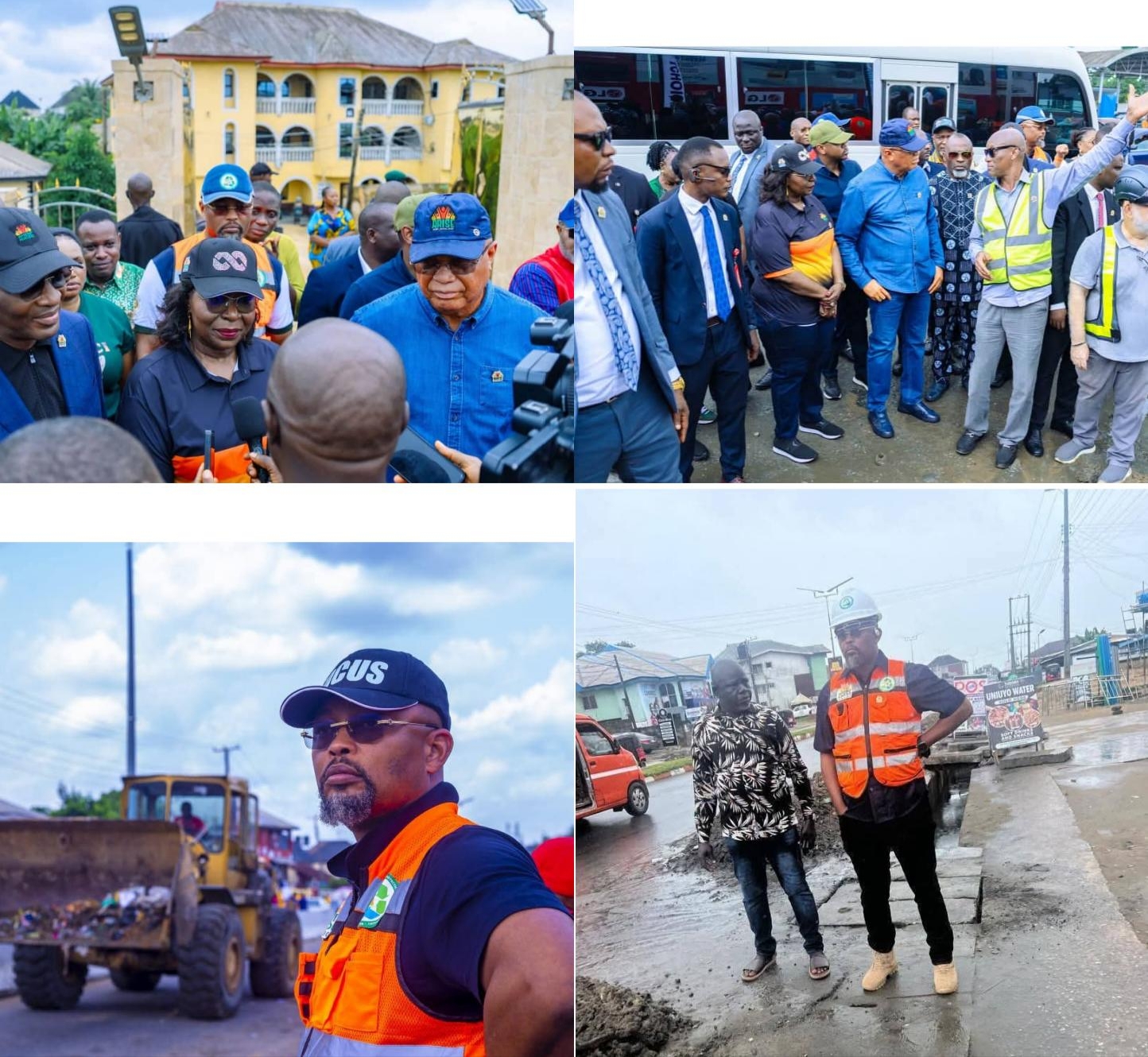
Akwa Ibom State recorded one of its most successful monthly environmental sanitation exercises on Saturday, July 25, 2026, as stricter statewide enforcement led to unprecedented compliance across all 31 Local Government Areas, leaving major streets deserted, sanitation courts operating at full capacity, and residents actively participating in the clean-up exercise.
Observed on the last Saturday of every month, the July edition of the environmental sanitation exercise marked a significant turning point in the state’s environmental management drive, with officials reporting one of the highest compliance levels recorded in recent years.
From 7:00 a.m., commercial and social activities across Uyo metropolis and other parts of the state came to a complete standstill as residents remained indoors to clean their surroundings, clear refuse, desilt drainage channels and comply with the compulsory sanitation exercise.
The operation, coordinated by the Akwa Ibom State Environmental Protection and Waste Management Agency (AKSEPWMA), reflected a renewed commitment by the state government to environmental sustainability, public health and urban cleanliness.
To ensure strict compliance, security personnel drawn from the Nigeria Police Force and the Ibom Community Watch were strategically deployed across the state to enforce movement restrictions and sanitation regulations.
The enforcement exercise resulted in the arrest of several defaulters, who were immediately arraigned before the Environmental Sanitation Court sitting on Fulga Street, off Ikot Ekpene Road, Uyo.
By 8:00 a.m., the sanitation courts had reached full capacity as judicial proceedings commenced simultaneously in six courtrooms to ensure the speedy hearing and determination of sanitation-related offences.
Speaking while monitoring compliance, the Chairman of AKSEPWMA, Hon. Prince Ikim, disclosed that the exercise recorded over 86 per cent compliance across the state, describing the turnout as unprecedented.
He explained that the statewide monitoring exercise involved the Commissioner for Sanitation and Water Resources, members of the Akwa Ibom State House of Assembly Committees on Environment and Health, the Chairman of Ibiono Ibom Local Government Area and other stakeholders, while the Deputy Governor, Senator Akon Eyakenyi, led the overall state monitoring team.
The success of the exercise was attributed to the collaborative efforts of AKSEPWMA, the Akwa Ibom State House of Assembly (AKHA), the Association of Local Governments of Nigeria (ALGON), the Nigeria Police Force, environmental contractors, the media, residents and several Ministries, Departments and Agencies (MDAs), all of whom played critical roles in ensuring the smooth conduct of the statewide exercise.
Also speaking during the monitoring exercise, the Chairman of ALGON commended the Akwa Ibom State Government for sustaining policies that promote a cleaner, healthier and more sustainable environment, describing the level of compliance recorded across the state’s 31 Local Government Areas as highly commendable.
Residents who spoke with journalists equally applauded the government’s continued commitment to the monthly environmental sanitation programme, noting that the restriction of movement created an opportunity for families and communities to thoroughly clean their surroundings and actively participate in keeping the state clean.
Environmental experts have consistently maintained that regular sanitation exercises remain one of the most effective measures for preventing disease outbreaks, reducing indiscriminate waste disposal, improving drainage systems and mitigating flooding, particularly during the rainy season.
Authorities noted that the extensive clearing of blocked drains, evacuation of refuse and desilting of gutters carried out during the exercise would significantly improve the free flow of stormwater while promoting a cleaner, healthier and safer environment for residents across Akwa Ibom State.
Beyond the monthly sanitation exercise, the Akwa Ibom State Government has intensified post-sanitation operations to ensure that environmental cleanliness is sustained beyond the designated sanitation hours.
Through AKSEPWMA, under the leadership of Hon. Prince Ikim, large-scale waste evacuation operations are ongoing along Ikot Ekpene Road and adjoining communities, while similar waste evacuation activities are being carried out simultaneously at multiple dumpsites across the state’s 31 Local Government Areas.
Officials described the post-sanitation initiative as part of a broader environmental management strategy aimed at institutionalising cleanliness as a daily culture rather than a once-a-month obligation.
According to the agency, every cleared drainage channel, evacuated dumpsite and cleaner public space reflects government’s commitment to protecting public health, improving environmental sustainability and creating a cleaner, healthier and more welcoming environment for residents and visitors alike.
The initiative, officials said, reinforces the long-standing belief that cleanliness is a culture, not an event, while serving as a practical reminder that environmental responsibility must extend beyond the monthly sanitation exercise.
The remarkable success of the July sanitation exercise has further reinforced Akwa Ibom State’s reputation as one of Nigeria’s cleanest and most environmentally organised states.
Visitors to the state have consistently commended the cleanliness of Uyo and other communities, describing the orderly environment, well-maintained roads and attractive surroundings as distinguishing features of Akwa Ibom.
Observers say the state’s reputation did not emerge by chance but is the product of years of deliberate environmental planning, sanitation policies, sustained public sensitisation and continuous investment by successive administrations.
Stakeholders noted that while government has continued to strengthen environmental enforcement, improve waste management and sustain monthly sanitation programmes, long-term environmental sustainability cannot be achieved through government efforts alone.
They stressed that environmental cleanliness remains a shared responsibility requiring the active participation of traders, transport operators, landlords, market associations, youth groups, schools, religious institutions, traditional rulers, community organisations and every resident of the state.
Environmental advocates further maintained that proper waste disposal, regular clearing of residential surroundings, responsible sanitation practices and consistent participation in the monthly sanitation exercise are essential to preserving Akwa Ibom’s enviable status as one of Nigeria’s cleanest states.
According to them, a clean environment does more than enhance aesthetics. It protects public health by reducing the spread of diseases, prevents blocked drainage channels, mitigates flooding, supports tourism, attracts investment, promotes economic growth and strengthens Akwa Ibom’s reputation as a preferred destination for business, conferences and leisure.
While stricter enforcement of environmental laws has strengthened compliance, stakeholders insist that civic responsibility, environmental consciousness and collective pride not enforcement alone must remain the driving force behind the state’s cleanliness culture.
They therefore urged residents to embrace cleanliness as a daily lifestyle, properly dispose of waste, protect public infrastructure, keep drainage channels free of refuse and work collectively with government to preserve the environmental legacy for future generations.
