

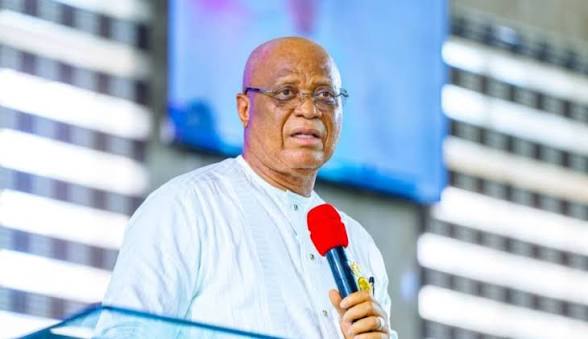
A growing wave of delays across key capital projects in Akwa Ibom State has drawn criticism from governance analysts and engineering experts, who trace execution bottlenecks directly to Governor Umo Eno’s centralized management style and frequent policy shifts.
Despite high-profile announcements under the administration’s signature ARISE Agenda, ranging from housing estates and road expansions to model primary schools and healthcare facilities, several key initiatives have slipped past their initial delivery timelines.
Dr. Clement Bassey, a public policy analyst and institutional governance researcher, observed that the administration’s tendency to centralize operational decisions within the executive office has effectively paralyzed statutory project channels, adding that bypassing supervising commissioners, permanent secretaries, and ministry engineers to issue direct site directives creates an environment of hesitation and bureaucracy across state agencies.
“Effective public governance relies on delegation and institutional frameworks, not executive micromanagement,” Dr. Bassey noted. “When a governor insists on personally overseeing micro-level operational details such as issuing abrupt, arbitrary monthly production quotas directly on project sites, it undermines the statutory authority of supervising commissioners and site engineers. Rather than accelerating progress, it creates an atmosphere of uncertainty where officials hesitate to make routine decisions without direct executive clearance.”
Beyond central control, technical specialists highlight that shifting directives and mid-stream policy modifications continue to disrupt engineering schedules, adding that infrastructure developments require long-term procurement planning, predictable funding releases, and structured technical sequencing, elements that experts say are frequently upended by sudden policy pivots.
Addressing the technical implications of these shifting mandates, Engr. Bassey Effiong, a senior infrastructure consultant and urban planning specialist, emphasized that major civil engineering works cannot be managed through reactive administrative directives.
“Capital infrastructure development is governed by precise engineering workflows, cash-flow projections, and structural sequencing,” Engr. Effiong explained. “You cannot manage multi-billion-naira projects through reactive policy shifts such as suddenly altering delivery targets mid-course or abruptly modifying scope during routine inspections. These frequent policy flip-flops force contractors to restructure procurement pipelines on short notice, which compromises both structural standards and delivery schedules.”
The broader financial implications of execution delays are also stirring concern among economic observers. Public sector projects in Akwa Ibom State routinely draw heavy budgetary allocations, and prolonged completion timelines mean that public capital remains tied up while inflationary trends push up the cost of construction materials and labor.
Prof. Udeme Akpan, a development economist, warned that the fiscal consequences of delayed infrastructure ultimately fall on the state’s taxpayers, noting that unfinished assets fail to yield economic returns while steadily draining state resources.
“Delayed infrastructure is not merely an administrative oversight; it carries compounding economic costs,” Prof. Akpan said. “When strategic assets remain unfinished well past their target completion dates, public funds remain tied up while inflationary pressure inflates the cost of materials and labor. If the state administration intends to protect public funds and realize the core objectives of the ARISE Agenda, it must move away from unscheduled site visits and establish a structured, predictable project governance framework.”
Governance observers maintain that unless the state government re-evaluates its operational approach, decentralizes decision-making, and guarantees policy stability, critical infrastructure projects across Akwa Ibom State will continue to face costly setbacks, threatening the overall economic vision of the administration.
