

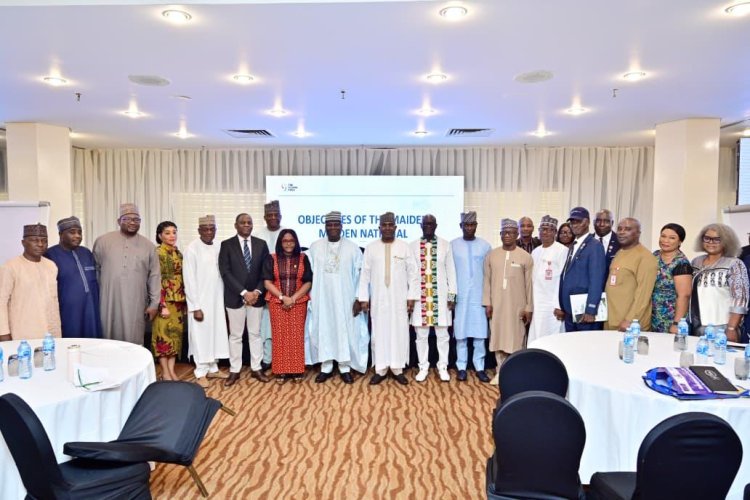
The Federal Government has reaffirmed its commitment to dismantling drug trafficking networks, tackling the rising rate of substance abuse, and broadening access to treatment and rehabilitation services, declaring that Nigeria’s development cannot be sustained while illicit drugs continue to endanger its youth.
The commitment was announced on Wednesday by the Secretary to the Government of the Federation, Senator George Akume, during the opening of the National Drug Use Summit in Abuja. The summit brought together senior government officials, security agencies, international development partners, and civil society organisations to develop a coordinated national strategy against drug abuse and trafficking.
Represented by the Permanent Secretary, General Services Office, Dr. Adamu Kana, Akume said President Bola Tinubu’s administration remained steadfast in its efforts to prevent illicit drug use, dismantle trafficking syndicates, strengthen rehabilitation programmes, and improve the wellbeing of Nigerians.
Speaking on behalf of the Federal Government, Akume reaffirmed support for initiatives aimed at curbing drug abuse, expanding treatment and rehabilitation services, and disrupting criminal networks involved in illicit drug trafficking.
He warned that the increasing threat posed by illicit drugs requires urgent national action, stressing that no country can achieve sustainable development when its young people are trapped by addiction or when criminal trafficking networks continue to weaken institutions and exploit societal vulnerabilities.
According to him, the Tinubu administration, through its Renewed Hope Agenda, is reinforcing key institutions, promoting mental health, empowering young people, building resilient communities, and encouraging sustainable livelihoods, including agricultural enterprises, as part of efforts to address the root causes of drug abuse.
Also speaking at the summit, the Minister of Health and Social Welfare, Prof. Ali Pate, cautioned against allowing the gathering to end as another policy discussion without meaningful outcomes.
Pate said the true success of the summit would not be measured by the communique issued at its conclusion but by tangible improvements, including fewer young people initiating drug use, more patients receiving effective treatment, and more families recovering from the effects of addiction. He also pledged the ministry’s full commitment to coordinating national efforts against substance abuse.
The United Nations Office on Drugs and Crime (UNODC) also called for the effective implementation of Nigeria’s drug control commitments.
Representing the UNODC Country Representative, Mr. Cheikh Toure, Dr. Akanidomo Ibanga said the summit presents an opportunity to convert existing commitments into practical, measurable actions.
He observed that Nigeria’s evolving drug landscape, marked by the emergence of new psychoactive substances and changing patterns of abuse, requires evidence-based interventions supported by stronger collaboration among government institutions, civil society organisations, and international development partners.
The National Drug Use Summit attracted participants from ministries, departments and agencies, the armed forces, security agencies, international development organisations, non-governmental organisations, and civil society groups, all seeking to strengthen Nigeria’s response to illicit drug use and drug trafficking nationwide.
