

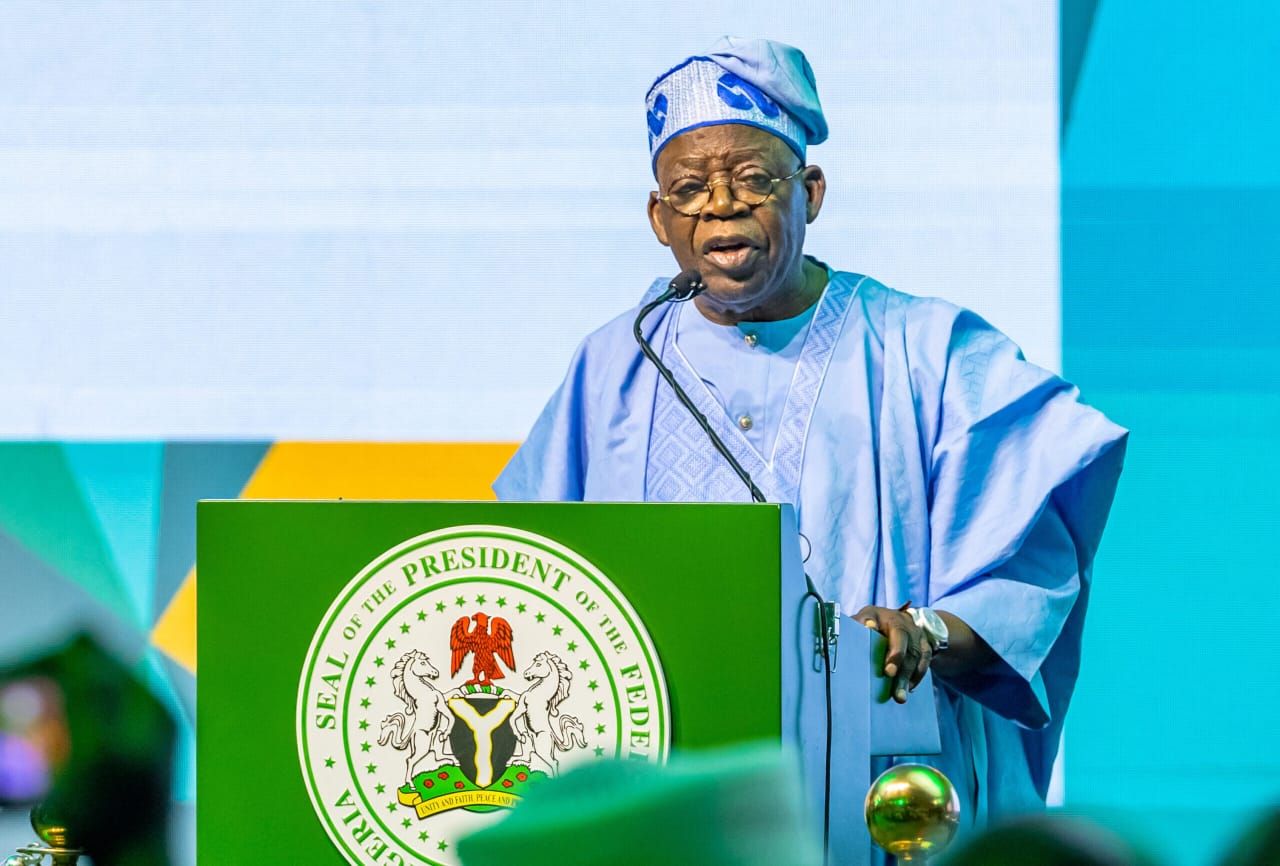
President Bola Tinubu has officially inaugurated the Presidential Working Group on the National Policing Bill. The committee’s mandate is to develop the detailed legal framework needed for implementing state police across Nigeria. He appointed his Chief of Staff, Femi Gbajabiamila, to chair the group.
The announcement was made on Tuesday in a statement by the President’s Special Adviser on Information and Strategy, Bayo Onanuga.
This move comes just two weeks after the Senate passed a constitutional amendment bill aimed at establishing state police services as part of efforts to decentralize policing in the country.
Key Objectives of the Bill
According to the Presidency, while the constitutional amendment provides the foundational legal backing for both federal and state police, a separate National Policing Bill is essential to spell out how the new system will actually function.
The bill will set clear standards and guidelines covering operational requirements, oversight structures, coordination between federal and state governments, accountability systems, human rights protections, and funding arrangements.
President Tinubu emphasized that the legislation will include provisions on minimum policing standards, certification of state readiness, federal-state collaboration, accountability mechanisms, human rights safeguards, and financial responsibilities.
He directed the committee to begin work immediately on producing a comprehensive, technically sound, and implementation-ready draft bill for submission to the National Assembly, rather than waiting for the constitutional amendment process to be fully completed.
Committee Composition
The committee is chaired by Chief of Staff Femi Gbajabiamila. Other members include:
– The Attorney-General of the Federation and Minister of Justice
– The President of the Nigerian Bar Association (NBA)
– The Chairman of the Nigeria Governors’ Forum (NGF)
– The National Security Adviser
– The Inspector-General of Police
– The Chairman of the NGF Committee on State Police
A dedicated secretariat will provide administrative support.
Governors’ Perspective
Representing the Nigeria Governors’ Forum, Ogun State Governor Dapo Abiodun welcomed the development, describing it as a response to long-standing demands for decentralized, community-oriented policing.
Abiodun noted that the bill addresses calls to move policing away from the Exclusive Legislative List. He added that state police would significantly boost national security by substantially increasing the number of officers on the ground. If each state recruits around 6,000 personnel, Nigeria could add nearly 200,000 officers to complement the federal police force. He also pledged that governors would push for the speedy ratification of the constitutional amendment by their respective state assemblies.
Broader Context and Concerns
The push for policing reform has gained momentum amid rising insecurity, including mass kidnappings, banditry, and violent crimes across several states. A recent abduction of pupils and teachers in Oyo State’s Oriire Local Government Area on May 15, 2026, further intensified calls for localized security solutions.
Proponents argue that state police would improve intelligence gathering, enable quicker responses to local threats, and strengthen the overall security architecture alongside the Nigeria Police Force.
However, concerns persist about potential abuse. NBA President Afam Osigwe, while supporting the initiative, stressed the need for strong safeguards to prevent governors from using state police for political oppression or abuse of power.
Similarly, former Labour Party presidential candidate Peter Obi warned that, without robust institutional checks, state police could be manipulated for political gains, particularly ahead of the 2027 elections. He called for solid legal and constitutional protections to mitigate such risks.
