

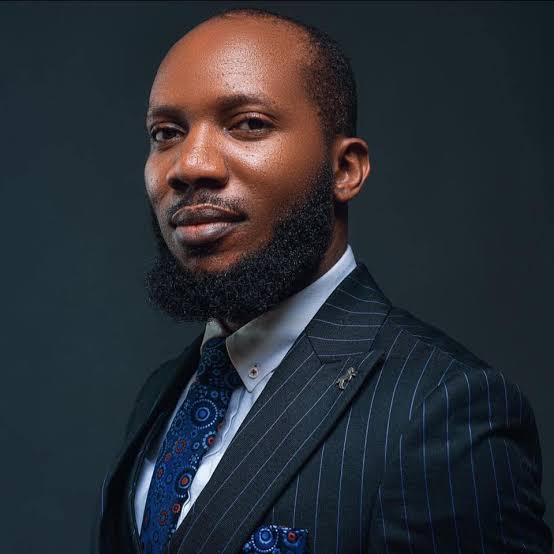
Human rights lawyer and public affairs commentator, Inibehe Effiong, has criticised the increasing practice of naming public infrastructure after President Bola Ahmed Tinubu, describing the trend as “unbridled sycophancy” that prioritises personality over public service.
Speaking during an interview on ARISE News, Effiong argued that while the executive has the constitutional discretion to rename certain public projects that do not have statutory names, the growing pattern of dedicating taxpayer-funded infrastructure to a sitting President is misguided and not in the public interest.
“It’s unbridled sycophancy. Is there a competition between appointees of the President and federal institutions over who is going to praise the President the most?”
Explaining the legal framework governing the naming of public institutions and infrastructure, Effiong said the law distinguishes between facilities whose names are established by legislation and those that are not.
“There are public infrastructures or institutions whose names are statutory. Where Parliament has assigned a name through legislation, you cannot rename such institutions through executive fiat. But where there is no statutory backing, the executive has the discretion to ascribe a name.”
Although he acknowledged that the executive possesses such discretionary powers in certain cases, Effiong questioned the justification for renaming projects financed with public funds after a serving President.
“These projects are funded with taxpayers’ money. They go through the appropriation process and belong to the Nigerian people. It is only commonsensical that their names should reflect the public interest rather than the personality of a serving President.”
Using the Lagos-Calabar Coastal Highway as an example, the lawyer argued that its original name accurately reflects its purpose and geographical significance.
“That road was originally named the Lagos-Calabar Coastal Road because it connects Lagos and Calabar. If you now rename it after the President, there has to be a convincing public justification.”
He further noted that the trend is not limited to road projects, alleging that several facilities within the National Assembly, the Nigeria Immigration Service and other government institutions have also been renamed in honour of the President.
“If you are a President who believes you have truly served the Nigerian people, you should allow history to judge you rather than seeking to entrench your name on public infrastructure.”
On the legal implications of such decisions, Effiong stated that any court challenge would depend on whether the original name of the project or institution is protected by law.
“If the name is contained in an Act of Parliament or specifically identified in an appropriation law, it cannot simply be changed through executive action. But where there is no statutory backing, the issue becomes one of public interest, logic and priorities rather than legality.”
He maintained that ministers responsible for announcing the renaming of public projects are acting under powers delegated by the President, making the President ultimately accountable for those decisions.
“The Minister of Works is exercising powers delegated by the President. So, in reality, it is the President renaming these public infrastructures after himself.”
Addressing concerns surrounding land acquisition for the Lagos-Calabar Coastal Highway, Effiong stressed that changing the name of the project does not exempt the government from its constitutional responsibility to compensate affected property owners.
“The Constitution and the Land Use Act are clear. Government can only acquire land for public purposes, and it must pay adequate compensation to those with legitimate interests in the affected properties.”
He also questioned the timing and necessity of the multi-trillion-naira highway project, arguing that the country’s current economic realities require greater emphasis on transparency and prudent management of public resources.
“At a time when the country is struggling with economic hardship, rising debt and fiscal pressures, the government should be prioritising transparency and accountability in major infrastructure projects rather than symbolic gestures.”
Effiong concluded by warning that the continued naming of public infrastructure after a serving President could weaken democratic values and shift the focus of governance away from the people.
“What we are seeing is the personalisation of governance. Public institutions should serve the people, not become monuments to a serving political leader.”
